
Green Coffee Bean, Raspberry Ketone and Garcinia: What the Research Says
These three ingredients are common in weight management capsules. Research on garcinia cambogia is still developing, and NIH's NCCIH summarizes what is known. Here is what each one is, in plain words, and what the Trimoryn label says about it.
 By Rebecca Hayes · Updated November 27, 2026
This site may earn a commission if you buy through links on the review page. It does not change what we recommend.
When I first picked up a weight management bottle, I could not tell which ingredients were doing what. So I looked each one up. This page is the short version, with the sources I trust.
I'm not a medical professional. Talk to your doctor before changing your routine or starting a supplement.
Which of these ingredients are on the Trimoryn label?
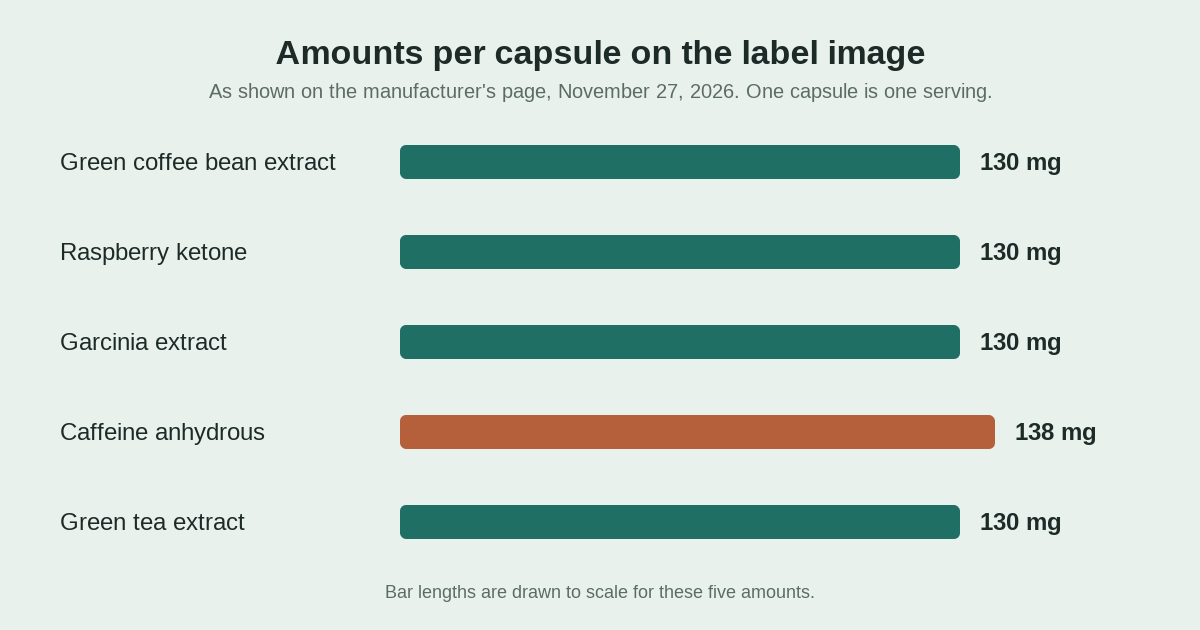
The Supplement Facts image on the manufacturer's page, which I read on November 27, 2026, lists five ingredients per capsule: green coffee bean extract, raspberry ketone, garcinia extract, caffeine anhydrous and green tea extract. Three of them are the subject of this page.
Here is what the label image shows. One capsule is one serving, and a bottle holds 30 servings.
| Ingredient (as printed) | Amount per capsule | Detail on the label |
|---|---|---|
| Green Coffee Bean Extract (Coffea robusta, seed) | 130 mg | 50% chlorogenic acids |
| Raspberry Ketone | 130 mg | None listed |
| Garcinia Extract (Garcinia cambogia, fruit) | 130 mg | 50% HCA |
| Caffeine Anhydrous | 138 mg | None listed |
| Green Tea Extract (Camellia sinensis, leaf) | 130 mg | 98% polyphenols, 75% catechins, 45% EGCG, less than 3% caffeine |
The label also notes that the Daily Value is not established for these ingredients, lists hypromellose (a vegetable capsule) as the other ingredient, and says "Contains Caffeine." Adding the five listed amounts gives 658 mg per capsule.
Everything in this article follows the label image I read on November 27, 2026. When your bottle arrives, compare it with the label and use my label guide as a checklist.
What is green coffee bean extract, and what does the research say?
It is a concentrated extract made from coffee seeds that were not roasted. This page sticks to what the label says about it.
Coffee beans naturally contain plant compounds called chlorogenic acids. Roasting lowers them, so these extracts start with raw, green beans. The label says 50% chlorogenic acids, which tells you how the extract was made.
What a bottle says on the front and what research shows are two different things. It helps to check both.
Studies usually test one ingredient at a time.
What is raspberry ketone?
Raspberry ketone is the natural scent compound that makes raspberries smell like raspberries. Supplements use a concentrated version. For this one, the label is the best place to start.
The label lists 130 mg per capsule. The front of the Trimoryn bottle says "Supports Fat Metabolism," "Supports Weight Management" and "Promotes Energy and Well-Being." Each line has a little star (asterisk). The star points to the FDA note on the panel: the FDA has not evaluated these statements.
What is garcinia cambogia, and is it safe?
Garcinia cambogia is a tropical fruit. Its rind goes into supplements, usually with a set amount of HCA (50% on this label). NCCIH says the weight-loss evidence is mixed, and it also reports some cases of liver problems.
NIH has a page on this ingredient. On its garcinia cambogia page, the National Center for Complementary and Integrative Health says some studies show a small effect and others show none.
On safety, NCCIH reports several cases of liver damage in people who took garcinia products. It says this appears to be uncommon, and it also lists headache, nausea and diarrhea. The NCCIH page is worth reading in full.
Curious how this label looks in real life? See the full Trimoryn review.
Read the full reviewWhat about green tea extract and the caffeine in the capsule?
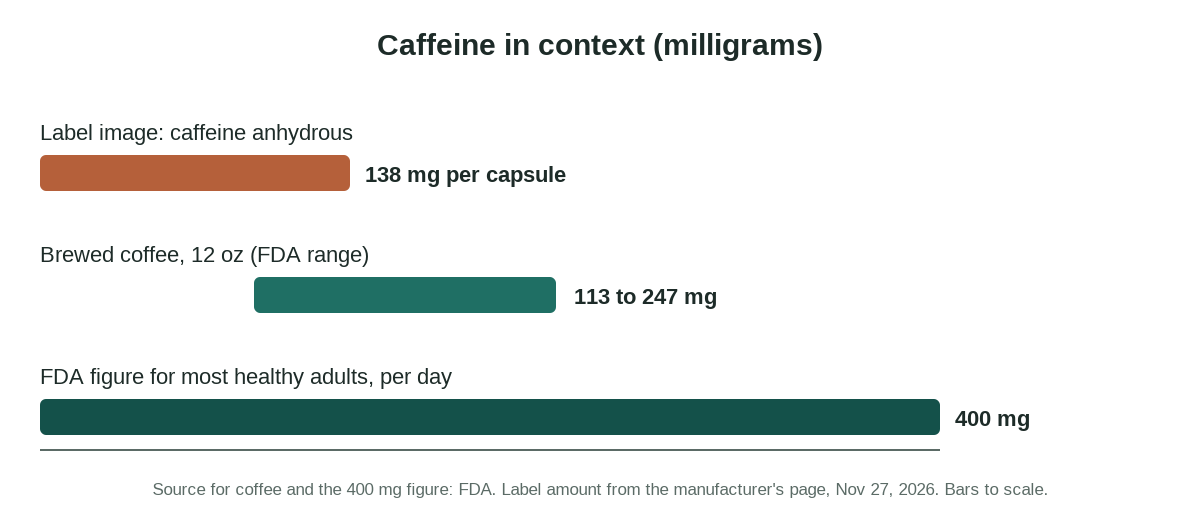
The label lists 138 mg of caffeine anhydrous. The green tea extract adds a little more, because it is less than 3% caffeine. That makes about 142 mg at most per capsule, which is more than a small cup of coffee and well under the FDA's 400 mg daily figure for most adults.
The FDA says 400 milligrams a day is an amount "not generally associated with negative effects" for most adults. That is about two to three 12-ounce cups of coffee. A regular brewed 12-ounce coffee has 113 to 247 milligrams. See the FDA caffeine page.
So one capsule has about as much caffeine as a cup of coffee. It adds up with everything else you drink, like coffee, tea, soda and energy drinks. The FDA also says people react to caffeine very differently.
For the green tea part, NCCIH lists side effects of green tea extract supplements such as nausea, constipation and belly discomfort. It also says green tea can interact with some medicines, such as nadolol and atorvastatin. The details are on the NCCIH green tea page.
Do the doses on the label match the doses used in studies?
Study doses are different for each ingredient, so there is no single answer. The sources linked on this page explain the doses used in each study.
A simple step is to take a photo of your label and write down the amounts. Then you can compare them with any source you read.
Who should ask a doctor before trying it?
The label says pregnant or nursing mothers, kids under 18 and people with a known health condition should ask a physician first. If you take medicine, or caffeine hits you hard (138 mg is on the label), talk to your doctor before you try it.
How should I think about these ingredients as a whole?
As one small piece of a bigger picture. The ingredients are easy to recognize, research on them is still growing, and the caffeine is worth planning around. Habits come first.
If you are curious about the product itself, I wrote a separate review that covers the label, price and the 60-day guarantee. If you want the bigger picture on habits, start with the metabolism after 40 guide. And if you want to learn to read any label, read my label guide.
Want the full picture on Trimoryn?
I wrote a separate review that covers the label, the price and the 60-day guarantee, in plain words.
Read the full reviewFrequently asked questions
Is green coffee bean extract the same as coffee?
No. It comes from coffee seeds that have not been roasted, and it is sold as a concentrated extract. The Trimoryn label image lists it with 50% chlorogenic acids. Check your own label for any caffeine information.
What does the research say about raspberry ketone?
This page does not rely on studies of raspberry ketone in people, so it sticks to what the label shows. The label lists 130 mg per capsule.
Is garcinia cambogia safe?
NCCIH reports some cases of liver problems, which it says appear to be uncommon, plus headache, nausea and diarrhea in some people.
How much caffeine is in the Trimoryn capsule?
The label image on the manufacturer's page lists 138 mg of caffeine anhydrous per capsule, plus a green tea extract line that states less than 3% caffeine. That is a bit more than a small cup of coffee, and the FDA cites 400 mg a day as a level not generally associated with negative effects for most adults.
Can I take green tea extract with medicine?
It can be a problem for some medicines. NCCIH says green tea can interact with some of them, including nadolol and atorvastatin.
Rebecca Hayes
After 40, what used to work for my weight stopped working, so I started reading about metabolism and kept going for years. I share what I learn in plain words.
I'm not a medical professional. Talk to your doctor before changing your routine or starting a supplement.
These statements have not been evaluated by the Food and Drug Administration. This content is for information only and is not medical advice. Results may vary. Talk to your doctor before starting any supplement, especially if you take medication.